
Yuula Benivolski
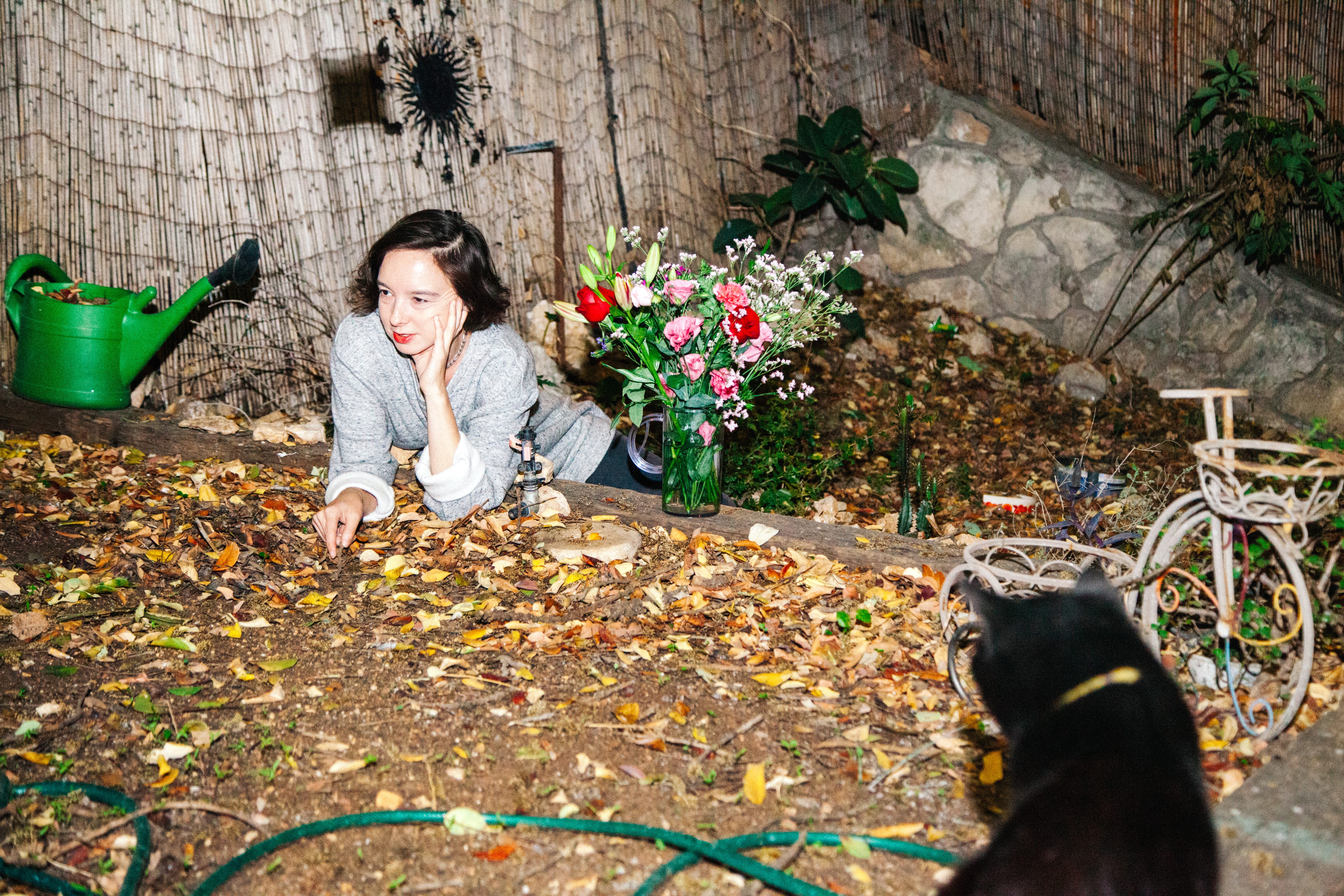
Yuula Benivolski (b. 1980) is a Toronto-based artist and filmmaker who was born in Moscow. At 10 years old, Benivolski’s family left the USSR and relocated to Shlomi, a small town in Israel that was built on the ruins of the Palestinian town al-Bassa after the 1948 Nakba. She later moved to Canada for school and has been based there since. Benivolski’s work spans sculpture, painting, photography, and film, and her debut feature film, The Black Box is Orange (2026), premieres at this year’s edition of TIFF in the Wavelengths section. The film is split into 10 different parts—nine chapters and an interlude—and is an autobiographical essay film that explores different aspects of her hometown, including pre-Israeli infrastructure, while drawing from personal experiences and memory. Joshua Minsoo Kim spoke with Benivolski on August 30th, 2026 to discuss how she renounced her Israeli citizenship, her circuitous path towards filmmaking, and the making of her debut feature.
Joshua Minsoo Kim: On your website, your bio is an astrological chart. You’re also working on a film called Born on a Train about the Soviet-born ballet dancer Rudolf Nureyev that’s based on his astrological chart. Can you tell me a bit about your relationship to astrology and how that informs your life and work?
Yuula Benivolski: I don’t know if that film will go in another direction, but I was interested in exploring my mother’s side of my family, as it was not given as much space as my father’s. My father’s family was with us longer, and his mother came to live in Occupied Palestine (Israel) when we lived there. With my mom, once her parents died she didn’t really have a connection to her family anymore. At some point I started exploring her side of the family. My mother is Tatar. In some sense, works I’ve made like Eclipse in the Garden (2021) should maybe remain private as they were made for my mother. So with my Tatar side, they’re Muslim. My grandpa read the Quran, and they would invite the Imam for the holidays. This was all happening before we moved to Occupied Palestine, where we lived in a small town that was incredibly Islamophobic, so once my mom’s parents died, it all kind of ended right there.
I found out what it meant for me when I got my ID in Israel. The ID card shows what you are: Christian, Jewish, Muslim, various ethnicities, etc. From that point on, I kind of stopped living there in my mind. You had to show your ID everywhere and I was terrified of doing that; I would hitchhike instead of taking the bus or train. I basically didn’t explore that side of my family because I was afraid to admit that my mother was Tatar and that she was Muslim. At one point, when I was already living in Canada for 16 years, I remember bumping into someone. They said, “You have very Tatar features,” and I went (gasps) and started panicking. I didn’t even tell my partner at the time, and we’d been together for 6 years.
After this encounter, I thought about my panic and realized that I didn’t have to feel that anymore. It was no longer unsafe. As a child, I used to think that Israel let me in by accident and that if they found out I was Muslim, they would’ve kicked me out. In 2016, when I realized that it didn’t matter and I told my partner, he was like, “Wow, that makes sense why you panicked.” I told my friends and then it became a normal part of my life. Part of that has been exploring Tatar figures. My dad is Ukrainian Jewish and my mother is Tatar. When you look at Russian people, I don’t look like them, but when I see pictures of Tatar women, they look like little copies of me. We’re past this simple idea of representation now, but at the time, seeing people who looked like me and my family… I always felt that there wasn’t anyone who looked like us, so finding people who looked like me was really comforting.
With Rudolf Nureyev, I was interested in exploring his life because of all the mythology around him. For example, when he moved to the West, he didn’t know what money was, so when they asked him how much money they should pay him after he defected to the United States, he asked for something insane for the 1960s or 1970s, like $10,000 a month. And he got it. I understood this sort of naivety towards money and capitalism. I was born in the USSR and lived there until I was 10 and absorbed a lot of it. For me, I still have this relationship with money where I don’t respect it. It’s necessary and I know how to get it, but I don’t respect someone because of it, and I find some people’s relationships with it to be strange.
I found out that me and Nureyev were both born on a Wednesday and we had a similar background. His father was Bashkir and his mother was Tatar. And he was born on a train, so with astrology it’s interesting because this was a moving place of birth. When we left Moscow and took the long train journey to Bucharest before being flown to Tel Aviv, it was a sort of rebirth in a way. It was like my life changed to the point where it became unrecognizable. I felt this affinity with someone who was born on a train, who was an artist, who ran away, who had a tumultuous relationship with their family, and who wasn’t able to go back to the USSR. I didn’t realize when we left that we wouldn’t be able to go back. To hear him describe it and how he misses his family, how when you go back you’re still a stranger… I’m sure many people have this experience where if you go back you realize that you’re not that same person anymore. But I wanted to step away from all of that identity stuff and move into the mysterious world of what made him become an artist. It’s kind of what happened to me—I became an artist because my environment was suffocating, and it was the only way I was able to survive emotionally.
When did you recognize that art would be a way for you to survive in this way? I’m curious about your trajectory. I saw some of the early works you’ve made on your website. Self Portrait (2007) and Shadow (2008) are both sculptural pieces, but I’m wondering what came before that.
Photography was the first thing I studied. My dad used to have a darkroom in our bathroom back in Moscow. My dad was a sailor on a commercial fishing boat, and my parents had us when they were young—my mom was 21 and my dad was 20. He was on a fishing boat when I was born a month prematurely, and my mom had to send him a telegram—she told him to come home. He got off at the next port and took all the trains and buses he could. I believe this was the time of the Moscow Olympics, in 1980, so the city was closed off and he said he had to sleep on benches to wait to come back into the city. While coming home, he bought a camera. I still have it with me.
He used that camera to photograph our family. When we slept, he’d use the bathroom as a darkroom and he’d have the photos hanging. I’d see them when I took a bath. It was something that just existed, and there was always a pile of photographs on our shelf. The thing is, we left all our photographs when we left. We took one photo of each of me and my siblings before age 10. At the time, in 1990, we couldn’t take a lot with us. We left late at night and things were rushed, and I don’t know what happened to them. I used to obsess over those photos. I would look at them constantly and I wish I had asked my parents to pack them when we left. Not having any images of yourself when you were younger even though you remember them… it’s strange. You can’t see them, so you can only keep imagining them until they disappear.
My parents would always put me and my sister in art classes. She is 3 years younger than me. We’d paint and draw and make things. When we moved, we said we wanted to study art so they took us to this art class at this woman’s home. She was living in an apartment with her husband, but three months later he was no longer living there, and I saw that she was suddenly living with a friend. So it was two women, and they were always kind of semi-nude. That was my first time seeing a queer person. I was only 11, and I was living in a really religious and conservative area. This was all happening while I was living at the town that I talk about in my film, Shlomi. We moved straight there, and it’s because one of our closest relatives, my paternal grandmother’s cousin, had been living in the nearest town since the 1970s. When we showed up in 1990, she found my dad a job in this town.
There’s another reason we lived there, and it’s because it was one of these transit towns on the border that quickly accepted people who arrived and weren’t wealthy. It was harder for people with no money to move into a bigger city. My neighbors were Soviet or from Tunis, Yemen, or Morocco. It was mostly Soviets and Arab Jews. It was a small town and there was nothing to do, so my mom wanted us to do something instead of just playing outside. I’ve wanted to be an artist ever since I was a child—actually, I used to tell people that I wanted to be an artist or a detective. When I eventually went to high school, I realized it was a dead end—my teachers weren’t even making an effort to teach us anything. But across the road was an art school, and I begged my parents to let me apply. I went through the interview process and exams and my life changed entirely. I felt that I needed to do this or that I would wilt.
It’s funny that you say that you wanted to be a detective because it’s similar to the research you see with the “Little White House” section of your film, The Black Box is Orange (2026). You said you were taking a lot of photos early on, and I’m curious what that practice was like for you and how it’s evolved over time. Obviously you had documentation with photographs for your Migrant Creatures (2010) piece as well as your portrait series called Surfers (2016) in Oaxaca. Can you talk to me about how you’ve grown as an artist through that specific medium?
When I was in art school in high school, I was a painter. They took it very seriously—you had to write a thesis and you had an exhibition. I did that, and I’m not really sure what happened, but when we moved to Canada and I decided to go to art school, I just didn’t want to do it anymore. The way I approached photography was almost like painting, in a way. And it was also kind of like film, because I was never the kind of person who would take one photo at a time—it would always be serialized. There’s something about the repetition required that I couldn’t bring myself to do—it wasn’t enjoyable or good. I really admire photographers and photography, but I don’t think I have it in me to do it myself.
Like you feel restricted by it? You need something more?
I lose interest in it quickly. I find other people’s photos interesting, but I can’t do it myself. I need it to be something more. So I started making zines, and my photographs would be accompanied by poems or stories. Something about the immediacy of it was so satisfying. If I had something that I wanted to make into a book, I’d photograph something right away and just make this thing, this little story book. And it’d become more and more complex. I find that I need to experiment a lot in different ways, and through that, something grows. It’s hard for me to plan something and simply execute it; it’s not the way I feel creative.
Why make films, then? Why did you decide to make a feature film, and what do films do for you that photography can’t?
For a while I was using text and images and serializing them, and it was almost like I was making a film with stills. Filmmaking is something I was working towards for a very long time but I was afraid to trust myself with it. I’ve made so many films that will never see the light of day. I work with analog film because I learned how to make photos in a darkroom; I never learned how to do digital photography properly. Film, for me, is the closest artform to the body. Whatever the film experiences, I experience—if it’s cold, I get cold. If there’s a scratch, I can feel it with my hands.
There’s that one film, Sound of a Million Insects, Light of a Thousand Stars (2014) by Tomonari Nishikawa. Something I find very impressive about that work is that the reason it was made was because the government declared that the land [near the Fukushima Daiichi Nuclear Power Plant] was safe because they removed the topsoil. When you bury film in soil, the first thing that happens is it gets eaten by bacteria, but it wasn’t getting eaten because the bacteria was dead. And there were also these flashes of exposure even though it was buried in the ground at night. Filmmaking can be very physical.
Is his film what inspired the fifth chapter in The Black Box is Orange? That’s the one section that’s more experimental and you drench the film in water.
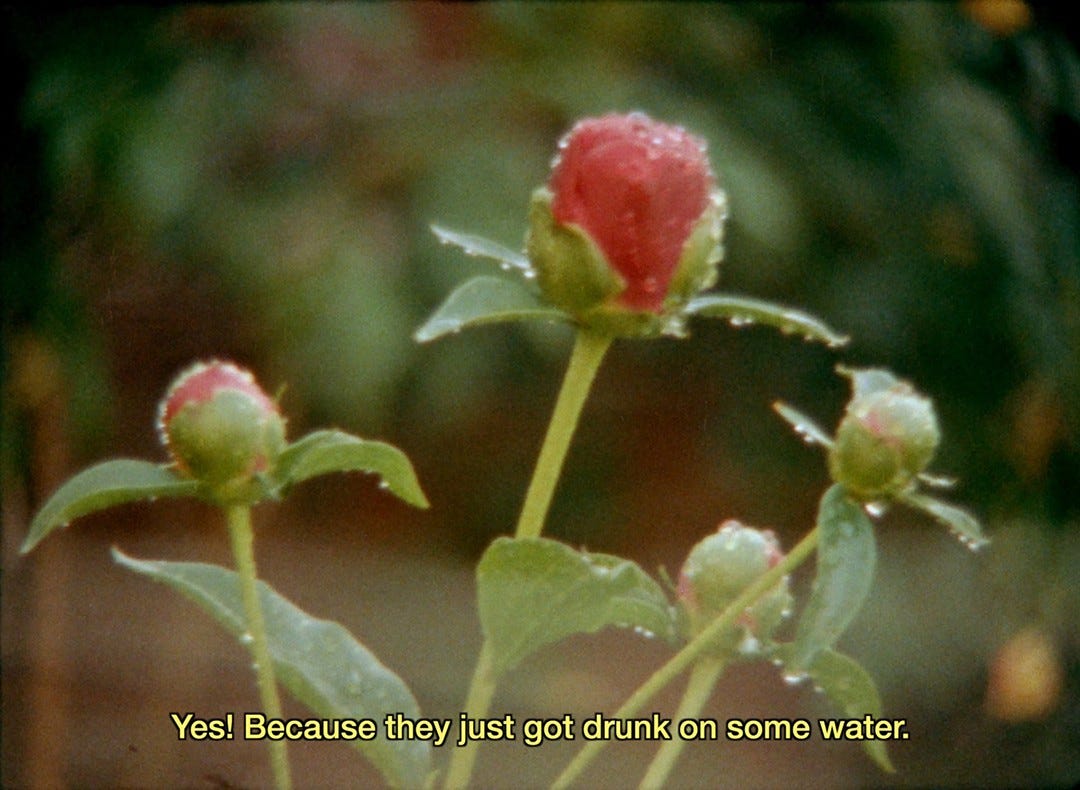
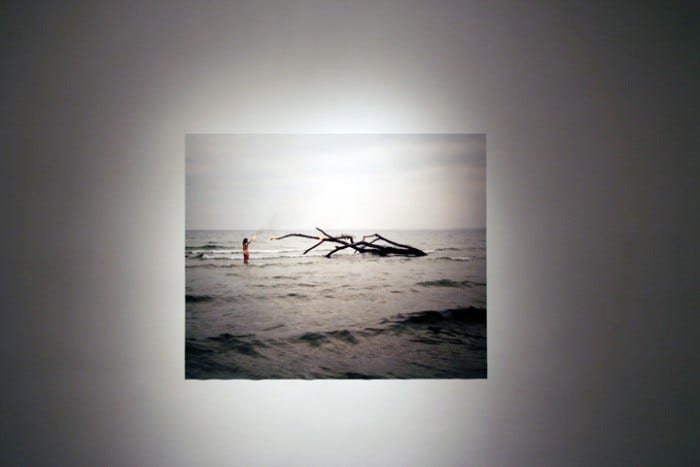
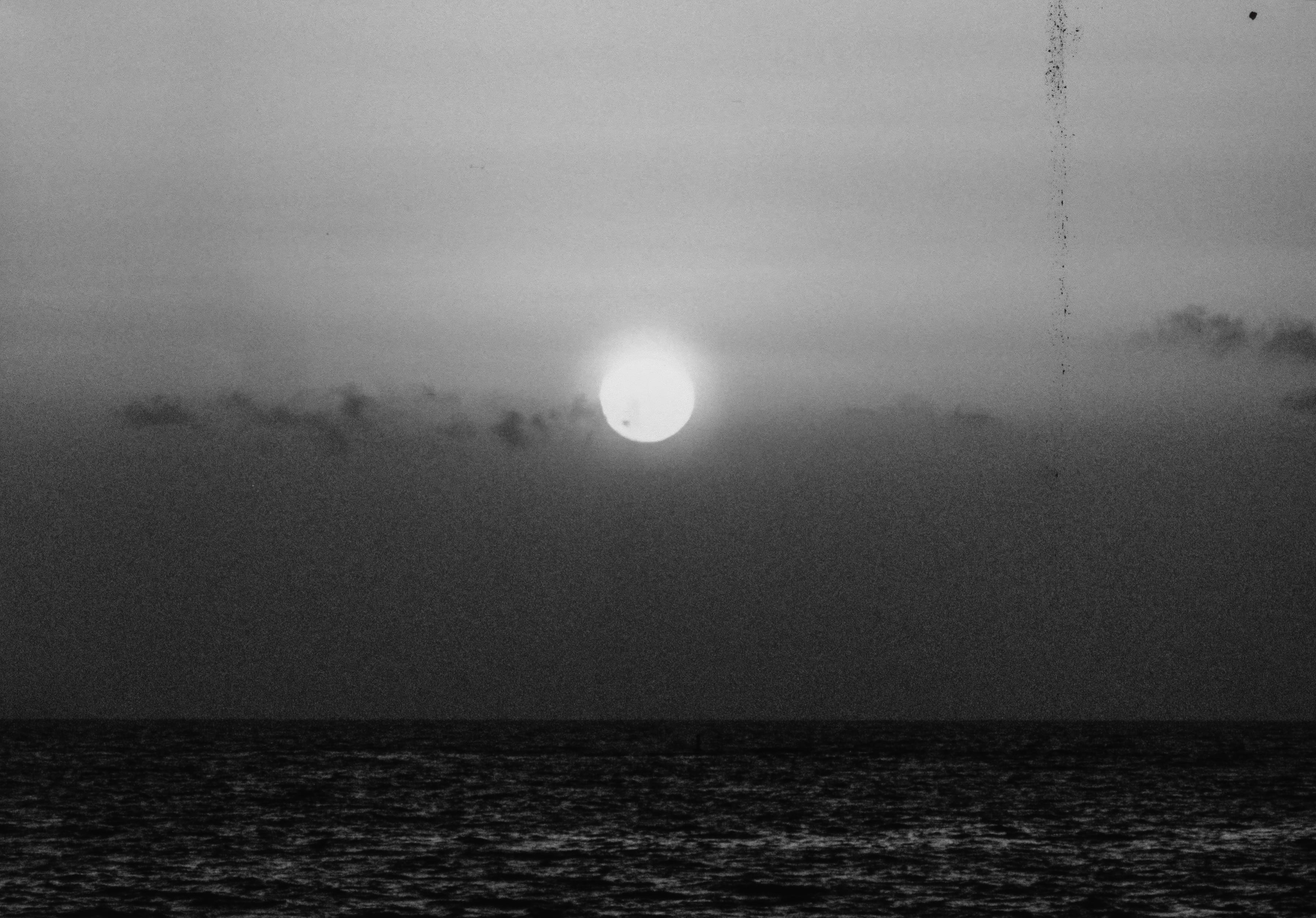
I had this memory of when my family moved to Shlomi. We all decided to walk to the sea. We didn’t have a car, and it was the Sabbath so there were no buses or taxis, so we decided to walk. We walked along the highway for 3 km and got lost. We tried to take a shortcut through this banana plantation and everyone was crying—it was an upsetting experience. While this was happening, a man came out of the trees and gave us oranges, and he was excited that we were new in town. We went to this beach, and it was very dark and rocky. It was stormy that day. It wasn’t very welcoming. That was my memory of it. In reality, we didn’t take a shortcut, we walked around the banana plantation. And there was an orange juice factory with a man who walked out and gave us oranges. It was a sunny day. There’s a picture of me standing on the beach and squinting. So, when I went back to the beach in 2018, before I knew this initial memory was not real, I remembered how I felt in that memory and I started bawling. It was a strange experience because I was just crying uncontrollably and at the same time, there was this celebration happening where they were giving an award to this fisherman who caught the biggest fish. I walked right through them. The next time I returned was in 2022 and I already knew the memory was false. I went back to the beach felt none of that sadness. I took some water from the sea, put them in a couple bottles, and that’s what I developed the film in.
In talking about your film, I think it’s also important to talk about the fact that you renounced your Israeli citizenship. I’m curious what that process was like for you, both in the leadup and the actual renunciation, but also the response from friends and family.
The reason I went back to Israel in the first place was because my grandmother died and I had to help my parents with the funeral. All the stuff I learned about Israel happened about five years after moving to Canada. I remembered having a memory of playing in ruins and I was in the library at the time. I started looking up stuff and found out about the Nakba and it was like the vacuum of unknowing was filled at once. So when my grandmother died, I had already been reading about all this for a long time, and when I was there I was seeing everything with new eyes—it was crazy. The entire time I was there, I was kind of dissociating because it felt like I was in another world. People were being kind to me, giving me directions or whatever, but there was this disconnect because they didn’t know or didn’t care about what I now knew. It was a terrifying feeling.
So I had been thinking about renouncing my citizenship, but I was told it was impossible. We were told that we’d have to sit in front of a committee and that we wouldn’t be able to go into the consulate if we didn’t have a valid passport, which I didn’t have for most of the time. So there were all these obstacles, but they were lies. Israel is trying to win the war of demographics and doesn’t want to lose people, and it’s also why they’re trying to bring in people from wherever they can: USSR, Ethiopia. It’s also why they brought all the Arab Jews from Iraq and Yemen and Morocco in the 1950s. There’s always been waves of people, and it’s because they want there to be a larger Israeli population.
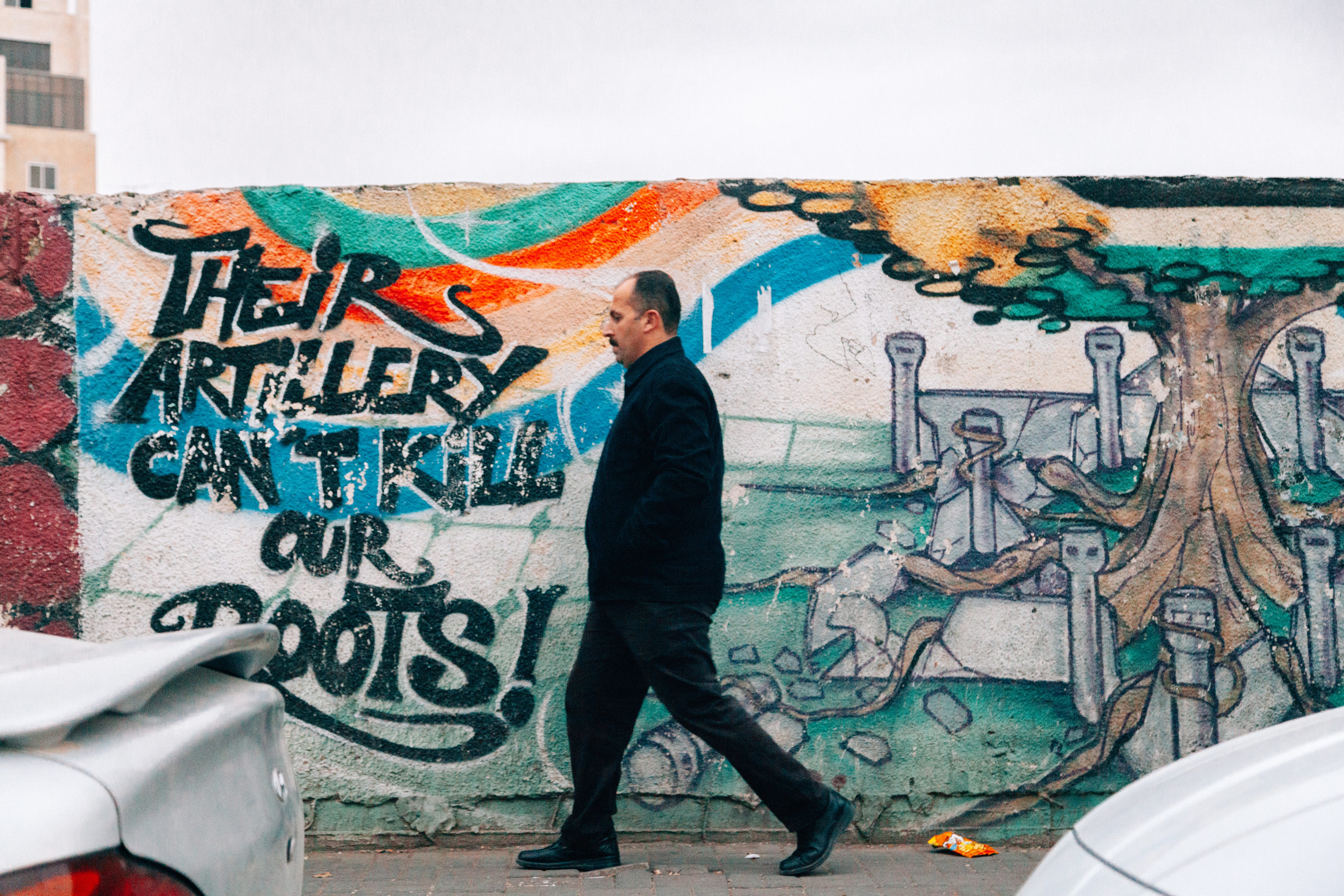
On October 7th, when I saw what was going on, I had this feeling that this was it. I saw people who were “leftists” revealing themselves to be liberal Zionists or taking a sharp turn to the right, and I thought that by removing myself in this way and getting other people to do it, it could change something. About 10 days after October 7th, I got a call from a friend in the West Bank. She told me that a lot of workers from Gaza were deported—Israel uses Gazan workers as cheap labor to build their homes, for example—and a bunch of workers who were stuck there after October 7th were deported to the West Bank. And this happened even though the West Bank and Gaza are different places; they probably didn’t have family there. But that’s what Israel did, and there was nothing they could do. They had no phone, food, or money, and my friend said that they were fundraising money for these workers. I did a couple days of fundraising, but the day I called her to send her money, she was screaming. She was at a march and they were being teargassed by the Palestinian Authority, which has been the ruling government of the West Bank for 20 years and has frequently collaborated with Israel. The people in the West Bank were marching in protest. This was the day of the first hospital bombing, on October 17th, when over 500 people were killed.
Is that when you knew you had to do this?
Yes. I felt so angry when I heard about the bombing, but also powerless. The first thing I did was open the consulate page and make an appointment. It took a month because they were terrified of people coming in. I didn’t tell my parents but I told my sister, and I didn’t tell anyone I was going to do it because I was scared. I was told all kinds of stories, that they were going to take me into the basement of the consulate and put me in a van, fly me back to Israel and put me in prison. I looked up stuff online and I only found three people who talked about renouncing their citizenship, and one of them didn’t do it—she only wrote an essay about it—while the other two did. One was Avigail Abarbanel, who is a psychotherapist and writer from Glasgow. She did it in 2001.
I wrote to her and she responded within an hour. She said, “You’re never gonna regret this, it’s the right decision. Whatever happens at that consulate will not be bad enough for you to not do this.” That’s all I needed to know. I told a Palestinian friend I was going to do this, and once you say something like that out loud, you can’t take it back. It’s like when you tell someone you’re going to quit smoking—I made myself commit to it. My friends said, “You should write a statement. It can’t just happen quietly.” So I did write a statement, and later we made a website to guide people on how to do this because the whole process is so opaque.
To get inside the Israeli consulate, you have to leave everything you have in a locker before you even go upstairs. There’s a camera downstairs in front of the elevator and you buzz in. They ask for your ID and you show them your passport through the camera, and then they ask who you are. They tell you someone is coming down, and they bring down a Shin Bet officer, so like a Secret Service person. They have an earpiece and they interrogate you in this very specific way. “How did you get here today? Where do you live? Where’d you live in Israel? Who was your elementary school teacher? Who were your neighbors? What street did you live on?” They ask you all these things, like the towns nearby, your friends’ names. They want to trip you up. So I was interrogated, and then he asked me why I was here. And as a note, I brought a group of friends with me to wait outside because I was scared.
I told him that I was here to renounce my citizenship. This was a month after October 7th and he was like, “What? Why? What’s the problem?” My strategy was to get the renunciation papers in and then announce, so I told him that I was an artist and that I travel a lot and only wanted to use my Canadian passport. I didn’t want to use my Israeli passport anymore. That’s something you have to do when you go back there—you always have to use the Israeli passport. If you pretend that you’re only Canadian, they’ll look you up and know you have an Israeli passport and make you another passport while you wait at the airport.
He asked me more questions. “Who came with you today?” “My boyfriend.” “Who’s your boyfriend?” And then I told him his name. “Does he have any other nationalities?” I said no. “Who else came with you today?” “My friends, they’re outside.” And he told me to wait. Within a minute, three more Secret Service guys come down—and this is in the middle of Toronto, which is ridiculous—and they go outside to my friends. They circle them, check them out, and then they finally let me go upstairs. When I was up there, it was kind of sad to be honest. They knew why I was doing this, and they were very nonchalant about it. It was like they weren’t even listening to me. “Sign here, pay this.” I had to pay $140. “You’ll get an email in three months.” I also went up there a second time to get my document, but the person who interrogated me was doing it in English, which is like the weirdest thing—you don’t even speak Hebrew? I was waiting for my document and they were talking for an hour before I told them I had to go to work. Then they gave it to me.
I read a statement afterwards, but I was so nervous with the Shin Bet officers following me around that I was giggling the whole time. Oliver Husain, a filmmaker from Toronto, filmed it. When I watched the footage, I was embarrassed because I was nervously giggling and it looked like I was just laughing. I ended up rerecording the statement and posting it for my friends. I went to bed, and when I woke up, it must have been posted somewhere else and over a million people saw it. People were calling me and writing to me. It’s probably good that it happened because it encouraged other people to do the same thing, but it was also the opposite of what I wanted to happen.
What do you mean by that? What would you do differently?
Maybe I wouldn’t have made a video and would’ve just written something. I made the video because someone recorded me the first time and I thought I’d just do it again in the same way. I despise being public. It was disturbing because almost every single person from high school and my previous life stopped speaking to me. This included people who were “leftists.” There were all these horrible comments, like, “I always knew you were a psycho!” I just blocked everyone because I couldn’t deal with it.
My family was upset, mostly because I didn’t talk with them about it. They didn’t want to be embroiled in all this. I was so horrified by the attention. I cannot tolerate that much exposure at once so I completely shut down afterwards. I still go back sometimes and read the messages I received then because there were thousands of them, and some of them were very nice and from all over the world. But ultimately, me doing that didn’t really change anything. But I still have the renunciation document, and I have it framed like people do with their degrees. I’m happy that I have it (moves camera to show me her framed document). Maybe one day my family and I will talk about it. They’re very private people and were disturbed by all the attention.
I didn’t want to put this experience into my film. That’s something I’m wary of, which is the grifting side of social media. I didn’t do anything with my statement beyond fundraising money for someone else. I find it gross when people do this and they’re like, “By the way, here’s my art show about it!” I’m really happy I did it, but I don’t want to be associated with that group of people.
I wanted to start talking more directly about the film. You made it over the course of several years, from 2018 to 2022. How long ago did you know that you would have this episodic structure of nine chapters and an interlude?
That just happened as I was writing and editing it. It began as a 20-minute thing and grew to over three hours. I realized that there was too much going on so I cut it in half—this was Part One, and there’s going to be a Part Two. With this film, the geographic space that I talk about is only 3 km x 3 km. I’d never made a feature before, and I had never written anything that was going to function with a long, interconnected structure. I found it nearly impossible to imagine how I’d go about that. And if I didn’t cut it in half it would end up being something so long that I wouldn’t even feel like watching it. My original film was to provide little snippets, like the conditions of the soil at a certain time. I wanted the audience to get at the meaning of what I was doing on their own—I didn’t want to force things on them. But early on, I realized that I couldn’t make anything that even seemed neutral because it was impossible.
I read this essay by Ariella Azoulay, who is a writer and curator. She wrote an exhibition essay in Israel [in 1994] called “The Black Box of the Occupation (Who Will Acclaim the Heroisms of Israel?)” that was about the archives. She said that the Israeli archives functioned as a black box because they contained random bits of information and crucial visual evidence all side-by-side, as if they were equal. And some of these photographic records, if you remove the forced Israeli interpretation—the notion that violence against Palestinians is “necessary”—the materials could be used as evidence for their crimes in a process of accountability.
When I originally went to the military archives, I went because my friend told me how her family’s photographs had been stolen. The first time I met her, she told me about her brother who was extra-judicially assassinated in Athens in 1986, as retribution for his political activities. A few years before I met her she had been shot while documenting a military raid at a checkpoint. Then she told me that most of her childhood photos were stolen by soldiers during the military raids when she was a child. So my first time back, I went to the archives because I felt like I could find these photos. And I thought that because I spoke Hebrew, I’m Israeli, and I had a passport that they would give them to me. That was naive of me.
While I was there, though, they did let me have some photos. The black box metaphor was true: the photos showed an invasion into a foreign country, a soldier who’s training others to commit ethnic cleansing, there are people reenacting terrorist acts that were committed against the Palestinian Arabs in the 1940s. There was all of this stuff you could see in the photos—evidence of crimes. The film is called The Black Box is Orange because the “black box,” the flight recorder, is actually orange. And in the film you often see something but it’s not actually what’s being said. And that also occurs in general ways, like I’ll say the [train] platform is green but then you see it in black and white.
A lot of the film is about how Israel is obscuring and suppressing information, but you’re also thinking about how all these different elements are interconnected. There’s one point where you talk about the man that pins you to the wall when you’re a teenager, and how patriarchy and violence against women is inextricable from Israel’s own violent history. You talk about how your town was a “buffer town” and that the people living there have these big tax breaks, which led to tech workers coming in. And then now we’re thinking about how our world is dictated by these same people.
I’m glad to hear you say all this. I rewrote that chapter (“Being Quiet”) so many times. I wanted to make clear that when you are teaching a group of people to dehumanize others—to the point where they don’t think twice about shooting another person—it starts from when they’re a child. So for example, when you go to Israel and talk to children, you can see the wheels turning. They’re trying to place you within a hierarchy. This notion of hierarchy is such a big part of society there. When you talk to anyone, they immediately start assessing where you are on the hierarchy so that can figure out how to speak to you. That’s the result of dehumanizing those who live beside you for 80+ years. When I was a child, I felt that people knew that I wasn’t Jewish, and it was terrifying. That felt like the real danger for me. There were always rockets, but my hypervigilance got directed to this other thing.


So much dehumanization happens through the destruction of history. In the film you talk about the heirlooms getting destroyed, you were just mentioning the photographs being stolen. At the end of the film, you talk about the JNF [Jewish National Fund] and what they’re doing to cover up the remains of Palestinian life. In the third chapter, you talk about this area where everyone swam and fished, but now it’s specifically just for the military. There is no opportunity for people to learn about anything, to experience these places and learn about their history. You said earlier that you wanted to plainly state specific truths, and I’m curious how you thought about your script, your voiceover, the rhythm of your speech. You also have the one section in the bomb shelter where there’s text without any voiceover.
My town was bombed twice every week the whole time I lived there. And when I talk about it now, I kind of don’t really feel anything. It was more of a nuisance than anything else. But there was this epidemic of sexual harassment, assault, and violence towards women—and especially women like me who were foreigners. I mean, even when I went back in 2022 to film, one day I didn’t notice that a rocket fell beside me because I had headphones on, but if a man even turned towards me while I was walking, I was ready to fight. That stays with you. When you learn that sort of dehumanization, it trickles down to every aspect of your social life. This is something many women there experience from when they’re children, and it is something I still can’t deal with or think about. In that chapter, I said that I stopped going to the bomb shelter because I was scared about bumping into a man down there. That was the real danger.
I know the film is very personal, and I know that it’s almost confessional in places, but I have been so restrained. I stripped down basically everything I could until only the essence remained. I don’t really have an interest in making trauma porn. Nobody wants to be put into that position. For example, when I included my friend’s child in the film, it was 2022. When people watched it in 2025, two years into the genocide, everyone who watched the film was saying, “I was just waiting for something bad to happen.” That’s why I noted that the 1-year-old child is now 5, very much alive and just as cute. The footage of a baby is supposed to be a cute break, not five minutes of dread. But within the current context it’s hard to take anything at face value. Technically, with all of my films, there’s always manipulation involved in order to create some distance, or it needs to be mediated through a variety of layers. Some of the footage in my film was shot on a phone and then re-filmed on a projector and then digitized. Some was filmed and then altered and then re-filmed, and so on.
I watched a David Lynch lecture once and he said something like “Write 70 scenes and you’ve got a movie.” I thought, cool. I wrote 84 just to be safe (laughter) and I put them up on the wall. I wrote them using all my research, and it didn’t sound very conversational originally. So when I listened to myself tell this story, it just felt like I was reading from a textbook. I then started thinking about myself in relation to these things. It’s a lot easier to understand complex ideas when someone’s telling you a simple story—like the one about me driving with my mom in the middle of the night—rather than treating something like some sort of equation. I tried using an informal way of telling a story for the first chapter, and it worked. That’s the one about the [train] platform.
The project was originally about the Hejaz railway. I became obsessed with the railway for a couple of years. It was so unbelievably impressive to me, and when I went back for my grandmother’s funeral, I was looking around and found this train platform. I was shocked to see that a train used to pass there because my town only had a bus that ended at like 5PM or something. There used to be a train that went all the way from Alexandria to Beirut, and I found out that the previous [Palestinian] town that was there was to be the last stop before crossing to Lebanon. The town itself was massive and had 60 shops, a hotel, a central bus station, and an agricultural co-op that supported the entire region. My town barely had a falafel stand. Israel loves to talk about how all these “villages” were “primitive,” but this town was four times bigger than mine. When I found the platform, I initially wondered why we didn’t have the train pass through if the tracks were there. My second thought immediately after was that it’s because they made an artificial border and declared a state of emergency for everyone all the time.
I wanna ask about the last section of the film when you see the protest and the Palestinian flags. Where did that take place and why did you decide to end it in this fashion?
The last section of the film is from a march that used to happen every year. Israel celebrates its Day of Independence on May 14th, and Palestinians commemorate Nakba Day on the following day, May 15th. On Nakba day, those people who were internally displaced within Occupied Palestine are allowed to have access to their land—that’s the only day when the gates are open. It’s quite cruel. There’s a film called Ma'loul Celebrates its Destruction (1984) that depicts this. I watched that film in Ma'loul on the day they were allowed in there. We watched it projected inside of a church, which is not functional but still standing. The people from the film and town were there.
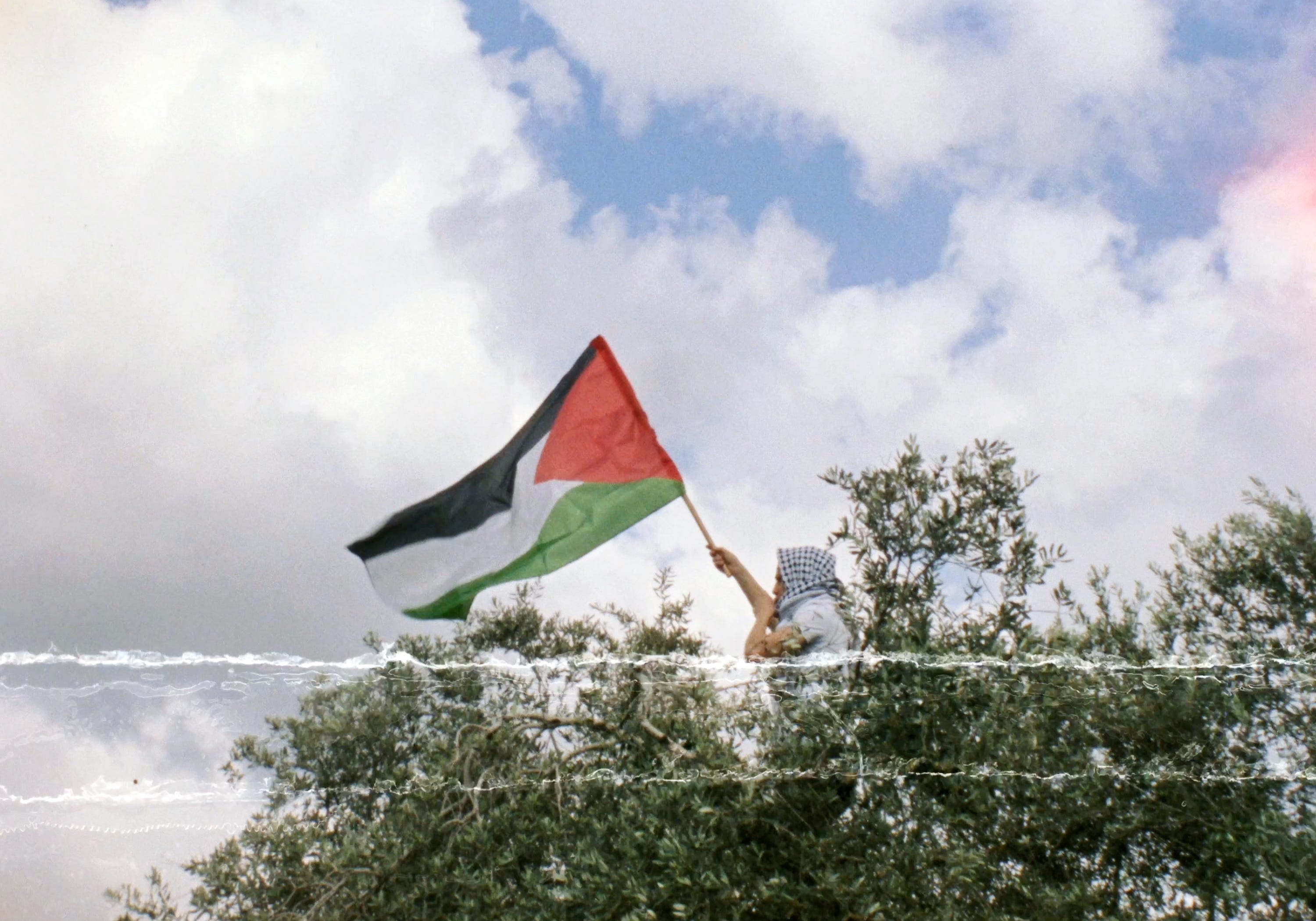
My film ends with the March of Return, which is a commemoration that happens every year and coincides with Land Day. Every year, those who were internally displaced in Occupied Palestine in 1948 gather in a place chosen that year, and march through the ruins, olive groves, or whatever remains. During that year, the march took place in Mi’ar, and there was this organization present prior to the march, called Zochrot, which in Hebrew means “We Remember”. They organize educational tours in the depopulated Palestinian towns, and bring survivors of the Nakba or their children from those particular places, and they describe what happened when the Jewish militias invaded. It’s mostly geared towards Israeli Jews and internationals. There’s about 50-100 people every time, but that year there were more, because the march happened just after Ramadan that year and usually it’s a time when Israel tightens security measures, which basically means they terrorize the people of the occupied West Bank and Gaza and Palestinians with Israeli citizenship. So the march happened right after a very violent time. When I entered that area, there were hundreds of police with cars, motorbikes, and whatever you can imagine. They were armed. It was border police—military police—and regular police. The point was intimidation; they didn’t want people to go in. When we were in there, I was aware that we were surrounded and that while there were many of us, there were even more of them.
In the film you can hear people talking about JNF. The tour that we were on was infiltrated by a JNF volunteer who showed up and interrupted the tour guide the whole time, arguing with him. I filmed the whole thing, and then I filmed the JNF man walking in front of me. He kept talking to the people on the tour and you could tell it was all about bureaucracy for him. He was arguing about the boundaries of the original town. It was this slow nagging. Everything there is punishment by bureaucracy—it’s so dysfunctional. If you’re Israeli Jewish and need help from someone in the government, it might be days before you can get help from someone. If you’re Palestinian, it’ll probably never happen. There’s a certain futility you feel.
I wanted to end the film this way because the march was so well attended and it was one of the last things I did there, and unlike the rest of my time there, it actually felt good to be with them. There were so many young people. I never saw a Palestinian flag in all the time that I lived there as a teen. We used to shop in Palestinian villages and towns all the time but I never saw one. You could see a lot of kids waving flags at the march and they weren’t scared. They were chanting, yelling “Freedom, freedom, freedom!” After all of the shit that came beforehand, it felt so emotional to experience this on my last visit.
There’s a question I end all my interviews with and I wanted to ask it to you. Do you mind sharing one thing you love about yourself?
I’m not afraid of people. Maybe it happened through the experience of immigrating twice, but I can go up to anyone and ask anything. I’m not fearful when it comes to that. For the second film that’ll come out, I interviewed both my Zionism high school teachers. I went to a school that was considered the most leftist of them all—it was considered very liberal—but they still taught an incomplete history.
Yuula Benivolski’s debut feature film, The Black Box is Orange, plays at this year’s edition of TIFF.
Thank you for reading the 72nd issue of Film Show. Freedom, freedom, freedom.
If you appreciate what we do, please consider donating via Ko-fi or becoming a Patreon patron. Film Show is dedicated to forever providing its content for free, but please know that all our writers are paid for the work they do. All donations will be used for paying writers, and if we get enough money, Film Show will be able to publish issues more frequently.